Maybury Casino account guide: Grosvenor online registration and KYC
 Available in GB
Maybury Casino does not operate a separate Maybury-branded online registration flow. Readers who want to use the connected online service create and manage a Grosvenor Casinos account, while Edinburgh Maybury remains the physical venue. For Great Britain customers, identity verification is part of that online gambling process: Gambling Commission rules require remote operators to obtain and verify identity information before a customer is permitted to gamble, including at least name, address and date of birth.
That does not mean every Grosvenor customer must upload the same fixed bundle of documents. The operator’s current terms list examples that may be requested, including a passport, full driving licence, national identity card, utility bill and bank statement. The exact request depends on what needs to be verified. There is also no verified universal Grosvenor KYC completion time, so a fixed 24-hour or 48-hour completion promise would be misleading.
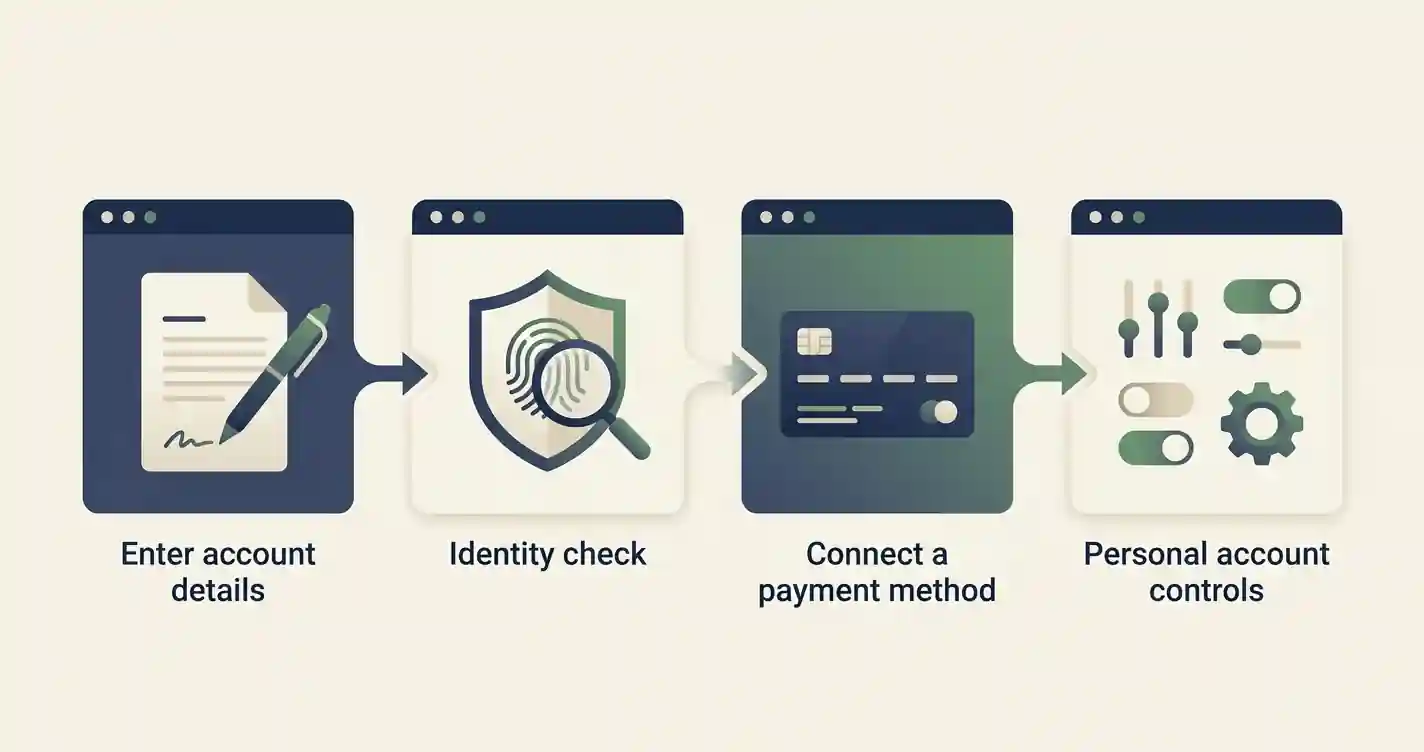
Table of Contents
- What has to be verified before gambling starts
- What the Grosvenor online account may need to verify
- Documents are examples, not a universal checklist
- Why source-of-funds checks can appear later
- Verification and withdrawals are connected, but not identical
- Safer-gambling controls belong in the account journey
- A sensible online-registration workflow for Maybury readers
- When an account detail changes after registration
- How Maybury readers can prepare for Grosvenor online verification
What has to be verified before gambling starts
The regulatory baseline is straightforward. A remote gambling licensee serving Great Britain must establish a customer’s identity before allowing that person to gamble. The Gambling Commission specifies name, address and date of birth as information that must be included. This requirement changes the old idea that identity verification is mainly a withdrawal-stage obstacle. The account should be subject to the required identity process before real-money gambling begins.
That baseline is useful because it separates mandatory identity verification from later or more detailed checks. A routine registration journey can involve information that the operator is able to check electronically. In other situations, a customer may be asked to provide supporting evidence. The presence or absence of an upload request at the first screen does not by itself tell you whether all future verification is complete.
The Gambling Commission also says customers should be told, before they deposit, what kinds of identity documents or other information might be needed, the circumstances in which they might be required and how they should be supplied. This is an important protection against a completely opaque process. It also means a player should pay attention to account messages rather than assume that a successful first deposit closes every verification question permanently.
What the Grosvenor online account may need to verify
Grosvenor’s current general terms describe a wider set of verification checks used to meet legal and regulatory obligations. They may cover age, identity, address, location, financial circumstances and the source of the funds deposited and used. The terms also allow other appropriate credit, fraud-prevention and verification checks.
Those categories serve different purposes. Age and identity establish who controls the account and whether that person is old enough to use the service. Address and location can help establish account and jurisdiction details. Financial-circumstances and source-of-funds checks can become relevant where the operator needs to understand whether gambling activity and the money funding it are consistent with regulatory and anti-money-laundering obligations.
It is therefore better to think of KYC as an account lifecycle rather than one document upload. A player may pass initial identity checks and later be asked for further information because a different question has arisen. Grosvenor’s own “Getting to Know You” information specifically explains that it may sometimes need documents and information connected with affordability and where funds are coming from.
Documents are examples, not a universal checklist
The official terms provide a useful list of documents that may be requested, but the wording matters. It is a set of possible supporting documents, not a statement that every customer must submit every item. Examples include a passport, full driving licence, national identity card, recent utility bill and recent bank statement. The terms also mention other records that can support name or identity changes in relevant cases.
| Verification area | Examples that may be relevant | What not to assume |
|---|---|---|
| Identity and age | Passport, driving licence or national identity card | That every customer must upload all three |
| Address | Recent utility bill or bank statement | That one document type is always mandatory |
| Financial circumstances or funds | Information or evidence requested for the specific review | That a single public threshold applies to every account |
If Grosvenor requests evidence, use the instructions in the genuine account flow or other official channel. Its current customer guidance warns that it will not ask customers simply to email sensitive documents directly. That distinction is practical: verification documents can contain information that should not be sent to an address or person merely because a message looks convincing.
Do not send more than has been requested on the assumption that more documents will always make a review faster. A better approach is to understand which point needs to be evidenced, provide the requested material in the specified way and make sure names, addresses and other account details are consistent.
Why source-of-funds checks can appear later
Source-of-funds and financial-circumstances checks are not the same thing as the basic name-address-date-of-birth identity test. Grosvenor’s terms allow these additional checks, and its customer guidance explains that it may need to confirm where funds are coming from and whether spending remains affordable. The exact information needed depends on the case.
A universal trigger threshold would be misleading because there is no single public number at which every customer is automatically asked for the same evidence. The Gambling Commission’s framework includes requirements around customer interaction and financial vulnerability, while an operator can also have to respond to information or activity on an individual account.
From a user perspective, the useful preparation is ordinary record consistency. Keep personal details current, use payment methods in your own name where required, and retain access to legitimate records that could establish the information the operator asks about. That is more useful than trying to anticipate an undocumented trigger amount.
Verification and withdrawals are connected, but not identical
Account verification matters to payments because a withdrawal cannot be treated in isolation from the identity and funding history of the account. However, the Gambling Commission specifically says a withdrawal request must not create a new demand for information if the licensee could reasonably have asked for it earlier. An operator can still seek information at that time where another legal obligation means it is genuinely required.
Grosvenor’s withdrawal process also depends on payment routing and completed checks. The dedicated Maybury withdrawal guide explains the currently published fast-withdrawal and standard card routes without turning KYC into a fixed timer. If the problem is choosing a funding method rather than completing verification, see the Maybury payments guide.
This distinction is important when troubleshooting. A delayed payout does not prove that the operator has a standard verification backlog, just as completed initial registration does not prove that no further lawful check can ever be needed. Look at the specific request shown on the account and the relevant payment route instead of relying on generic review-site countdowns.
Safer-gambling controls belong in the account journey
Grosvenor’s current terms list several account controls alongside its safer-gambling framework. Players can set net deposit limits, use reality checks, take a temporary break and self-exclude. These are not separate from account management: they are controls that affect how the account can be used and can be most useful when set before gambling becomes difficult to manage.
Net deposit limits can be set over rolling day, week or month periods. Reality checks provide reminders during play. Grosvenor also provides a Take a Break option and self-exclusion, and its guidance refers customers to GAMSTOP for multi-operator online self-exclusion. The Gambling Commission independently requires gambling businesses to maintain self-exclusion arrangements and remote systems to provide accessible financial-limit tools.
The practical point is to configure limits around money you can afford to spend, not around what a bonus or session makes available. Verification establishes who is using the account; account controls help determine how that verified account is used. Both are part of a regulated customer journey in Great Britain.
A sensible online-registration workflow for Maybury readers
- Enter accurate personal details. Use your real name, current address and date of birth. Those are core identity fields under the GB remote-verification framework.
- Read the document notice before depositing. The operator should explain what categories of information could be needed and how to provide them.
- Respond only to the actual request. If additional evidence is requested, provide the specific supporting material through the stated official route rather than sending an arbitrary bundle.
- Keep payment and identity details coherent. Account and payment information that can be reconciled is easier to understand than a trail of unexplained changes.
- Set account controls deliberately. Deposit limits, reality checks or breaks are easier to use proactively than after a session has already exceeded the plan.
- Do not plan around a fixed KYC deadline that Grosvenor does not publish. Grosvenor does not state one fixed completion time that applies to every verification case.
If you want the wider legal context behind these requirements, the Maybury UK rules guide covers the regulatory framework separately. The account guide focuses on what a customer should expect from registration and verification.
When an account detail changes after registration
Verification is not only about proving the original registration data. The Gambling Commission requires licensees to take reasonable steps to keep identity information accurate, so material changes should be reflected in the account rather than left inconsistent. A move of address, a changed legal name or a replacement payment method can create a legitimate need for updated evidence.
The practical rule is simple: update account information through the official service and answer any resulting verification request with evidence relevant to that change. Do not assume an old document will remain sufficient forever, and do not create a second account to work around a mismatch. Keeping one accurate account history reduces ambiguity when payments, safer-gambling controls or later checks refer back to the customer record.
How Maybury readers can prepare for Grosvenor online verification
The best preparation is precise rather than excessive. Register with accurate information, understand that identity must be verified before gambling, and be ready to provide the particular evidence Grosvenor legitimately asks for. Official terms support a broad range of possible checks, but they do not support treating every example document as compulsory for every user or publishing a universal source-of-funds threshold.
For a Maybury-focused reader using the online Grosvenor platform, the distinction also matters between the Edinburgh venue and the online account. Registration and KYC described here concern the online Grosvenor service for Great Britain. Use the Maybury Casino UK guide for the overall relationship between the venue and online platform, and keep any sensitive documents inside the operator’s genuine verification process.
Published by the Maybury Casino team.