Maybury Casino UK rules guide: what applies when using Grosvenor online
 Available in GB
For someone starting with Maybury Casino in Edinburgh, the first regulatory distinction is between the physical venue and remote gambling. This page deals with the rules that matter when a Maybury reader uses the separate Grosvenor online casino service in Great Britain. The practical framework comes from the Gambling Commission and the Gambling Act 2005 regime for England, Scotland and Wales: identity must be verified before gambling, credit-card gambling is prohibited, online slot stakes are capped by age band, self-exclusion tools must be available, remote operators must provide financial-limit controls, and current incentive rules cap wagering requirements at 10x while banning mixed-product incentives.
These are not abstract compliance points. They shape when an account can be used, how it can be funded, how much can be staked on online slots and how promotions may be structured. The Maybury licence guide covers the operator record itself; this page focuses on what the current Great Britain rules mean in practice for a player.

Table of Contents
- Great Britain and Northern Ireland are different regulatory scopes
- Identity checks happen before gambling
- Credit cards cannot be used to fund gambling
- Online slot stake caps depend on age
- Self-exclusion and GAMSTOP are part of the player-protection framework
- Financial limits and vulnerability checks are not the same thing
- A further deposit-limit rule change is scheduled for 30 September 2026
- Bonus rules now cap wagering at 10x and ban mixed-product incentives
- What these rules mean before you deposit or play
- FAQ about Great Britain casino regulation
- The GB rules Maybury Casino readers should know before playing online
Great Britain and Northern Ireland are different regulatory scopes
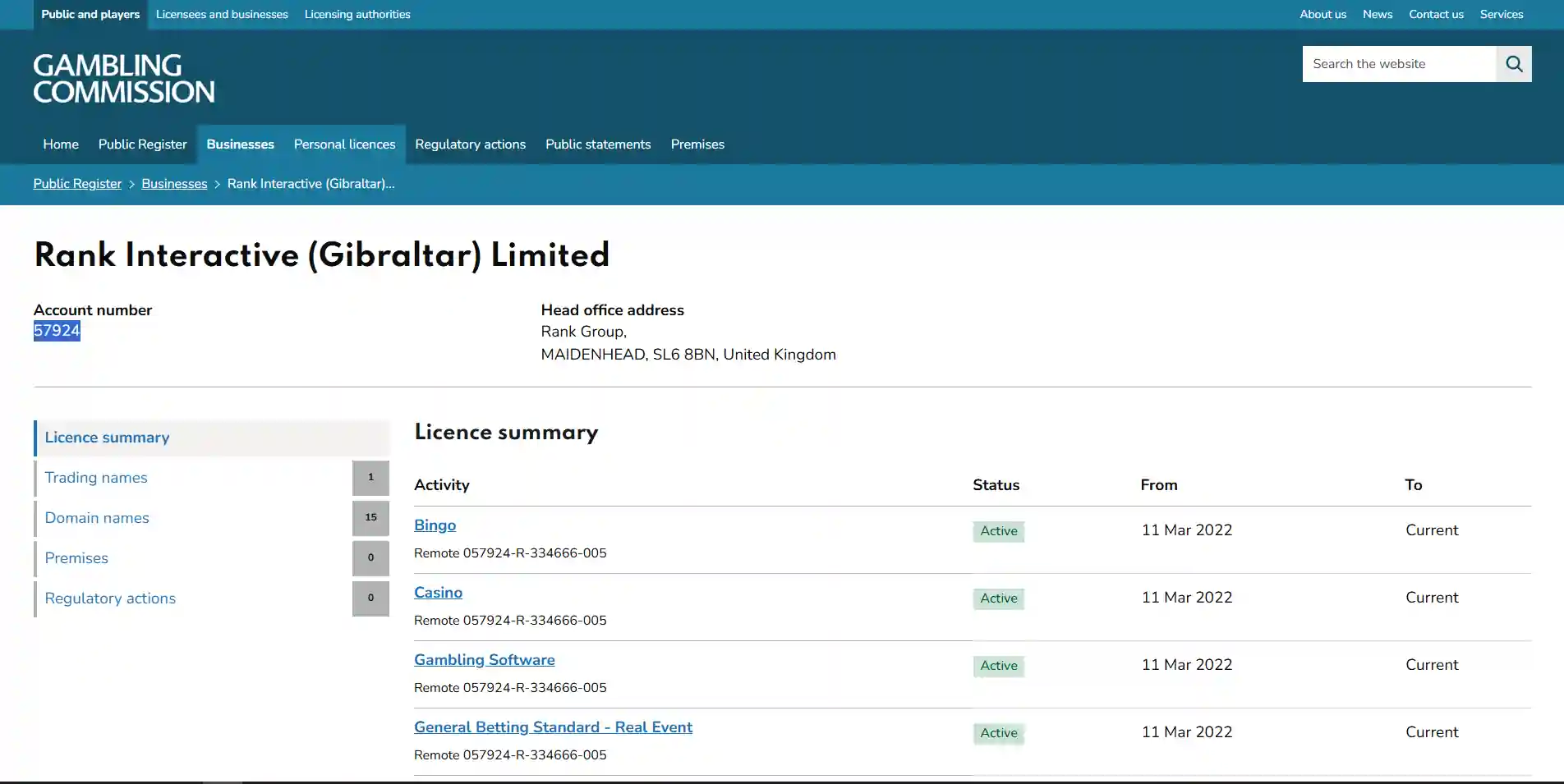
The Gambling Commission regulates commercial gambling under the Gambling Act 2005 in Great Britain, which means England, Scotland and Wales. A remote operator that provides casino gambling to consumers in Great Britain needs the relevant Gambling Commission remote operating licence. Grosvenor’s online domain is mapped in the public register to Rank Interactive (Gibraltar) Limited, so that GB remote framework is the relevant one when discussing the online casino service covered by this guide.
Northern Ireland should be treated separately. Gambling there is regulated under the Betting, Gaming, Lotteries and Amusements (Northern Ireland) Order 1985, as amended by the 2022 Act. The Department for Communities has also described wider reform of online gambling as a separate phase. The practical distinction is simple: a player-protection or technical requirement written specifically for Great Britain should not be treated as though it automatically has identical legal force across Northern Ireland.
For readers in Scotland, including those who know the Grosvenor name through the Edinburgh Maybury venue, the Great Britain rules discussed below are directly relevant to online play. The distinction is geographic and legal; it is not a statement about whether the same brand may be accessible elsewhere.
Identity checks happen before gambling
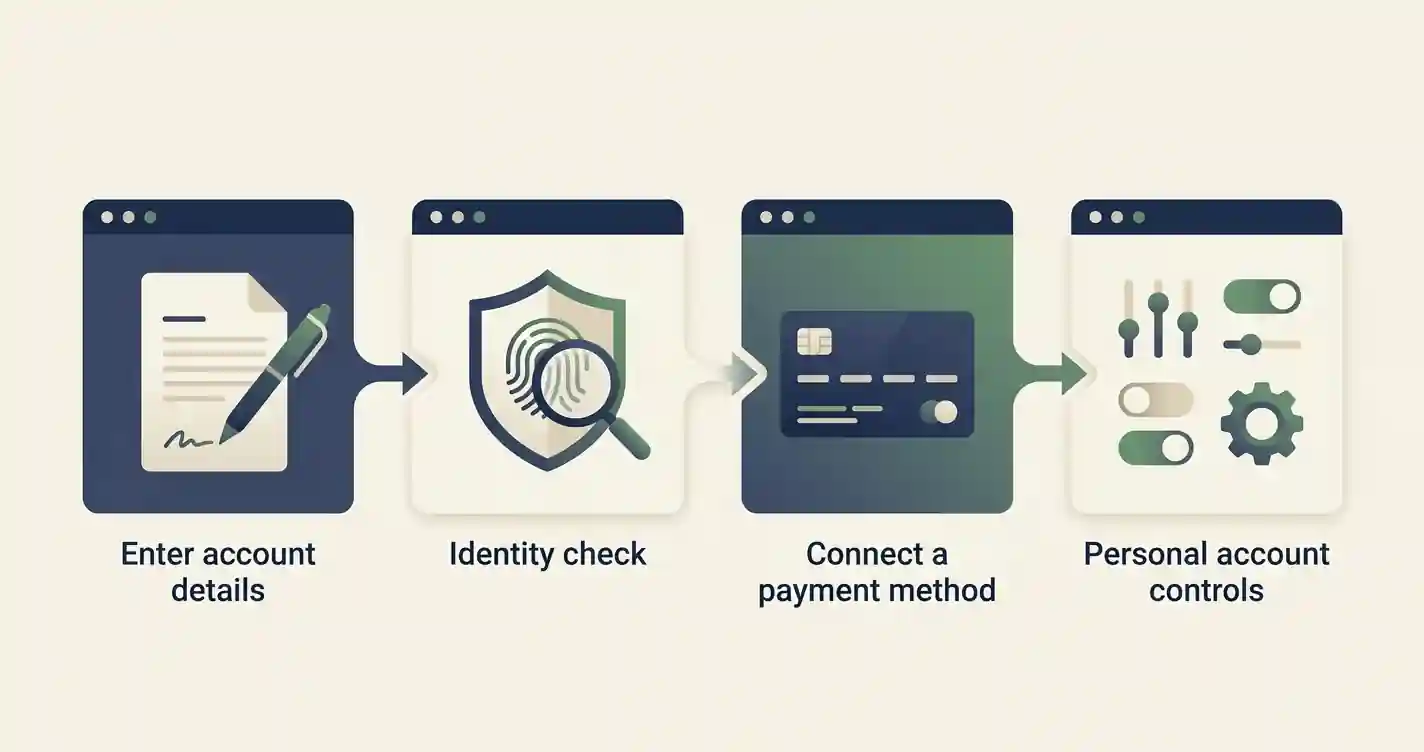
Remote licensees must obtain and verify information establishing a customer’s identity before that customer is permitted to gamble. The Gambling Commission specifies that the information includes, but is not limited to, name, address and date of birth. This is why registration is not merely a username-and-password exercise. An online casino account may require automated checks or additional evidence before real-money play is enabled.
The rule also matters at withdrawal. A business should not hold back an identity-information request until a customer cashes out if it could reasonably have asked for that information earlier. Other legal obligations can still create later information requests, but the core consumer protection principle is that routine identity verification belongs near the front of the relationship, not as an arbitrary obstacle after a win.
Grosvenor’s account process is covered in more detail in the Maybury account guide. A fixed universal KYC completion time is not stated here because current rules establish what must be verified, not one guaranteed processing duration for every account.
Credit cards cannot be used to fund gambling
Gambling businesses serving consumers in Great Britain must not accept credit-card payments for gambling. For online casino use, that includes direct credit-card deposits and attempts to route credit-card money through an e-wallet or other money service business. Operators accepting an e-wallet have to ensure the wallet does not allow credit-card-funded money to pass through for gambling.
The practical distinction is between payment convenience and source-of-funds rules. A familiar wallet or digital payment interface does not turn prohibited credit into an acceptable gambling deposit. Players comparing Grosvenor deposit routes should therefore focus on the currently supported debit, wallet and bank-payment methods described in the Maybury payments guide, rather than assuming that every funding source attached to a wallet can be used.
Online slot stake caps depend on age
Great Britain has statutory maximum stakes for online slots. For adults aged 25 and over, the maximum is £5 per game cycle. For adults aged 18 to 24, the maximum is £2 per game cycle. The £5 limit took effect on 9 April 2025 and the £2 age-banded limit followed on 21 May 2025.
The cap is specifically for online slots. It does not create the same £5 or £2 ceiling for roulette, blackjack or every other casino product. That distinction matters when reading a casino lobby because a site may place slots and table games next to each other even though the statutory stake-limit rule is product-specific. The Maybury games guide separates the library by category so the slot rule is not accidentally applied to live or table games.
| Player or product | Current GB rule | Practical effect |
|---|---|---|
| Online slots, age 25+ | Maximum £5 per game cycle | The slot cannot accept a higher total stake within that cycle |
| Online slots, age 18-24 | Maximum £2 per game cycle | The lower age-banded cap applies |
| Roulette, blackjack and other non-slot casino games | Not covered by this specific slot cap | Do not misread the slot limit as a universal casino-game maximum |
Self-exclusion and GAMSTOP are part of the player-protection framework
Licensed gambling businesses must have self-exclusion arrangements. For online gambling, GAMSTOP provides a multi-operator route that can restrict access to websites and apps run by gambling businesses licensed in Great Britain. This matters because an operator-level exclusion and a multi-operator scheme solve different problems: one can stop access to a particular business, while GAMSTOP is designed to cover participating licensed online operators through one registration.
Self-exclusion is a control for stopping gambling, not a budgeting feature. A player who instead wants to control how much money can enter an account should use financial-limit tools. Keeping those functions conceptually separate makes the safeguards easier to use: self-exclusion addresses access, while limits address spending boundaries within an active account.
Financial limits and vulnerability checks are not the same thing
Remote systems must provide accessible customer-led financial limits and prompt customers to set or review them under current technical requirements. Separately, remote operators are subject to light-touch financial vulnerability checks when the regulatory threshold is met. The Commission introduced those checks from August 2024, using public-record information to identify indicators such as bankruptcy or unpaid debts.
The current light-touch vulnerability check is not the same as the wider concept of a financial risk assessment. The Gambling Commission stated in May 2026 that financial vulnerability checks are an established remote-operator requirement, while financial risk assessments had not been introduced at that time. That distinction prevents a common error: describing every protective financial check as though the operator automatically inspects a player’s bank account. The Commission’s published material describes the vulnerability check as using publicly available information.
For ordinary use, the key point is that user-set limits and operator-side vulnerability checks have different purposes. A deposit or other account limit is a tool the customer can set. A vulnerability check is a regulatory risk-control process triggered under the relevant rules.
A further deposit-limit rule change is scheduled for 30 September 2026
As of 13 September 2026, further changes to Remote Gambling and Software Technical Standard 12B are scheduled to take effect on 30 September 2026. The Gambling Commission says that only limits meeting the definition of a gross deposit limit may be called a “deposit limit”, and operators must offer gross deposit limits at least at account level. The required timeframes include 24 hours, seven days and one month.
As of 13 September 2026, those provisions are still scheduled for 30 September 2026 and should not yet be treated as current requirements. From 30 September onward, the live Gambling Commission RTS should be checked for the in-force wording and implementation status.
Bonus rules now cap wagering at 10x and ban mixed-product incentives
From 19 January 2026, Gambling Commission social-responsibility rules cap promotional wagering requirements at a maximum of 10 times the relevant bonus funds. They also prohibit an incentive from mixing more than one gambling product type. These changes are especially useful to players because they address two areas that can make promotions difficult to compare: very high play-through conditions and bundles that combine structurally different gambling products.
A 10x regulatory cap does not mean every offer has exactly 10x wagering. It is a ceiling, not a mandatory standard value. A current promotion may use a lower requirement or no wagering condition at all, so the specific offer still needs to be read on its own terms. Conversely, an old review advertising a higher wagering multiple may simply be out of date after the 2026 rule change.
For Grosvenor specifically, promotion mechanics belong on the bonus page rather than in this legal explainer. The regulatory lesson is narrower: current GB incentives cannot exceed the 10x wagering cap and cannot use the prohibited mixed-product structure.
What these rules mean before you deposit or play
The most useful way to apply the framework is as a sequence. First, confirm that you are dealing with the licensed online service and not confusing it with a land-based premises record. Second, expect age and identity verification before gambling. Third, choose a permitted payment method rather than a credit-card-funded route. Fourth, understand that online slot stakes are capped according to age. Fifth, set account limits at a level that makes sense for your own budget and use self-exclusion if the goal is to stop gambling rather than merely reduce deposits.
Finally, read promotions as regulated contracts rather than headline values. The 10x cap and product-mixing ban improve the baseline, but eligibility and offer-specific details still matter. None of these controls changes the underlying economics of casino games: they are consumer-protection rules, not a way to create a positive expected return.
FAQ about Great Britain casino regulation
Are ordinary gambling winnings taxed in the UK?
For an ordinary individual player, gambling winnings are generally not treated as taxable trading income. HMRC’s current Business Income Manual states that betting and gambling as such do not constitute trading and that a taxpayer placing bets is not normally carrying on a trade. Unusual organised commercial activity can be treated differently, so this is a general explanation rather than personalised tax advice.
Does the Gambling Commission regulate Northern Ireland in the same way?
No. The Gambling Commission’s Gambling Act 2005 jurisdiction is Great Britain – England, Scotland and Wales. Northern Ireland has its own gambling framework based on the 1985 Order as amended in 2022, and its government has treated wider online-gambling reform as a separate policy issue.
Are £5 and £2 the maximum stakes for every online casino game?
No. Those statutory limits apply to online slots: £5 per game cycle for players aged 25 and over and £2 for players aged 18 to 24. The specific slot rule does not apply in the same way to roulette or blackjack.
Does the 10x bonus rule mean all offers have 10x wagering?
No. Ten times is the maximum permitted wagering requirement under the current incentive rule. Individual promotions can use a lower multiple or different compliant mechanics.
The GB rules Maybury Casino readers should know before playing online
For a Grosvenor player in Great Britain, the regulatory picture is clearer when each rule is tied to the decision it changes. The UKGC framework determines the remote-licence requirement, identity verification happens before gambling, credit-card funding is blocked, age determines the online-slot stake ceiling, safer-gambling tools include limits and self-exclusion, and promotional wagering cannot exceed 10x. Light-touch financial vulnerability checks sit alongside those customer-facing controls as a separate operator requirement.
The main date to watch is 30 September 2026, when the scheduled RTS 12B deposit-limit changes are due to take effect. Until then, they should be described as upcoming. After that date, the live Gambling Commission standards should be checked again. Keeping that date discipline, and keeping Northern Ireland separate from Great Britain, produces a more accurate guide than treating “UK casino law” as one static checklist.
For related context, see the Maybury Casino UK guide.
Prepared by the Maybury Casino editorial staff.